The Master in Real Estate (MRE) is a 12-month degree program for individuals seeking to acquire or sharpen traditional real estate skills while learning how well-designed real estate can advance beneficial spatial, social, and environmental outcomes in cities and metropolitan areas worldwide.
The MRE degree program teaches traditional skills and knowledge required of every real estate professional while simultaneously exploring how well-designed real estate can advance beneficial spatial, social, and environmental outcomes in cities and metropolitan areas worldwide. Through a multidisciplinary curriculum of required and elective courses concluding with a two-month off-campus practicum in a private or public real estate organization students learn about finance, development, design, law, economics, project and construction management, politics, leadership, ethics, negotiation, entrepreneurship, new technologies, culture, and other subjects essential to the practice of tomorrow’s real estate.
The MRE program teaches students about finance, design, project and construction management, government regulation, urban economics, politics, law, public-private partnerships, technology, ethics, entrepreneurship, negotiation, leadership, and other subjects essential to the practice of present and future real estate.
The placement of the MRE degree within Harvard’s Design School and its Department of Urban Planning and Design reflects the reality that real estate is a physical object designed by many forces and hands. MRE students benefit from being part of one of the largest design schools in the world, with close to 200 faculty members and 900 graduate students. Its departments of urban planning and design, architecture, and landscape architecture are remarkable, world-renowned places of innovation and exploration about the built environment. The Department of Urban Planning and Design is particularly well-suited to host the MRE degree program. It has Harvard’s only endowed chair in real estate, the Michael D. Spear Professor in Real Estate Development, along with the Plimpton Chair in planning and urban economics. Leading scholars and practitioners teach courses about real estate and related subjects such as land use and environmental law, urban design and planning, housing, transportation, international development, healthy cities, new towns, and urban history, among many other subjects.
The MRE program invites real estate practitioners from around the world to give talks and meet privately with the MRE students. The “Guest Speakers” tab lists past visitors. A student-run Harvard GSD Real Estate Club cosponsors with its Harvard Business and Law School counterparts an annual spring real estate conference and organizes a variety of other activities. Additionally, The Harvard Alumni Real Estate Board organizes job talk treks to various cities and, along with the Harvard Real Estate Alumni Organization, offers direct connections to Harvard real estate alumni. Many MRE faculty members are practitioners who enjoy strong relationships with many real estate organizations.
Beyond the GSD are Harvard’s 12 graduate and professional schools, along with the College, that together weave a rich tapestry of relevant courses and resources. Like all Harvard students, MRE students enjoy cross-registration privileges that enable them to take eligible courses at the Harvard Business School, the Kennedy School, the Law School, the T. H. Chan School of Public Health, the John A. Paulson School of Engineering and Applied Sciences, the College, and other Harvard graduate schools. Students may also cross-register in eligible classes at MIT and Tufts Fletcher School.
Applicants must possess a bachelor’s or equivalent degree. Two or more years of professional experience in real estate or related fields (urban planning, urban design, architecture, landscape architecture, etc.) are preferred. The program aims to have about 35 students.
Three terms of full time-study composed of nine months in-residence from late August to the end of May, plus a two-month off-campus summer Practicum are required for the award of the degree. The third (summer) term of the program is completed off-site while matriculated.
Please note that the MRE program is designated as a STEM program. Accordingly, international students holding F-1 visas may be eligible for a 24-month Optional Practical Training (OPT) extension on top of their initial OPT of 12 months, for a total of 36 months, following graduation. Each F-1 student must petition United States Citizenship and Immigration Services to approve the 24-month STEM extension, and Harvard does not represent or warrant that USCIS will grant any individual petition.
MRE graduates are prepared to assume a wide variety of positions in private for-profit, private not-for-profit, and public entities engaged in real estate endeavors around the world. Typical employers include developers, asset managers, private equity firms, project and construction managers, community development corporations, family offices, affordable housing developers and managers, governments and quasi-public agencies, real estate advisory and consulting firms, and anchor institutions such as universities and medical institutions. Some MRE graduates choose to set off on their own entrepreneurial path. Others return to the organizations where they worked prior to matriculation, but with opportunities for promotion and new directions. After graduating, the range of employment categories is broad and has included: Acquisitions, Asset Management, Development, Planning and Design, Private Equity/Investment Banking, Real Estate Advisory, and Technology.

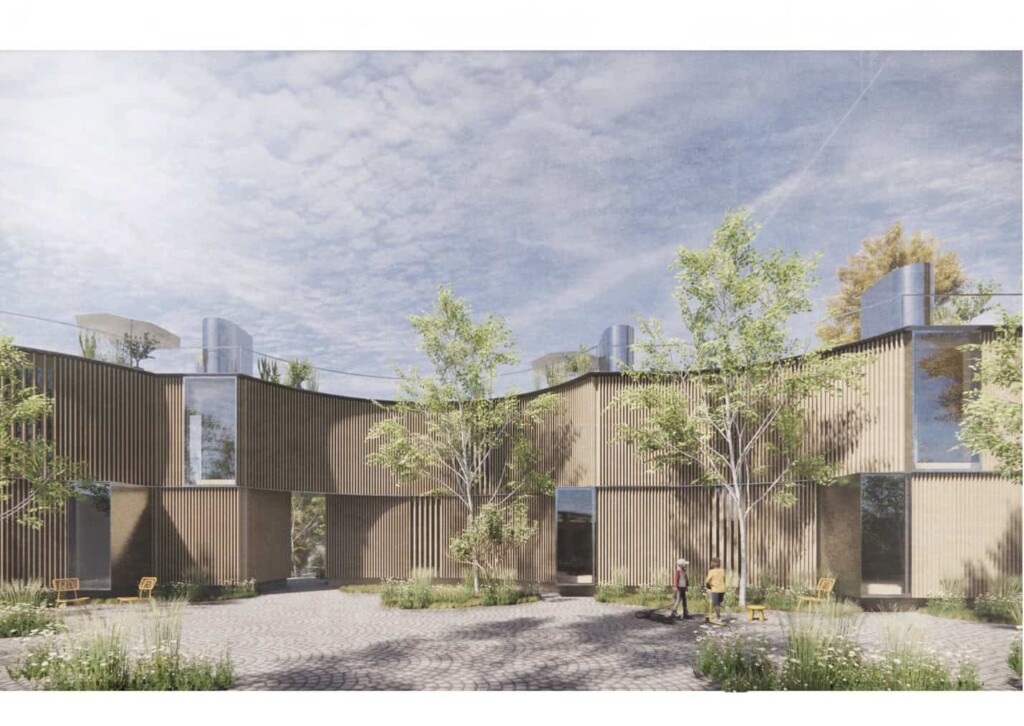

![Monterrey’s Urban [River] Forest: Improving Microclimatic Conditions through Public-Private Partnership Vertical Development](https://stage.www.gsd.harvard.edu/wp-content/uploads/2024/07/Monterrey-Urban-River-Forest_PlimptonPoorvuPrize2024_Submission-1_Page_01_2-1024x663.jpg)